<?xml version="1.0" encoding="UTF-8"?>
<?xml-stylesheet type="text/xsl" href="/wp-content/themes/feed/atom.xsl"?>
<feed
        xmlns="http://www.w3.org/2005/Atom"
        xmlns:wwe="http://release.wwe.com/atom/1.0"
        xmlns:thr="http://purl.org/syndication/thread/1.0"
        xmlns:taxo="http://purl.org/rss/1.0/modules/taxonomy/"
        xml:lang="en-US"
        xml:base="https://www.mattmlaw.com/wp-atom.php"
	>
    <title type="text">McClenahen Law Firm P.C.</title>
    <subtitle type="text">State College PA Criminal Law Attorney &#124; Centre DUI, Drug Law, Sex Crimes Lawyer</subtitle>

    <updated>2025-07-18T22:29:25Z</updated>

    <link rel="alternate" type="text/html" href="https://www.mattmlaw.com" />
    <id>https://www.mattmlaw.com/feed/atom/</id>
    <link rel="self" type="application/atom+xml" href="https://www.mattmlaw.com/feed/atom/?forceByPassCache=0.7771362625424905" />
	
	<generator uri="https://wordpress.org/" version="6.9.5">WordPress</generator>
<icon>/wp-content/uploads/sites/1204358/2019/08/apple-touch-icon-75x75.png</icon>
        <entry>
            <author>
									                    <name>On Behalf of McClenahen Law Firm P.C.</name>
				            </author>
            <title type="html"><![CDATA[Can drug charges affect my college education?]]></title>
            <link rel="alternate" type="text/html" href="https://www.mattmlaw.com/blog/2021/03/can-drug-charges-affect-my-college-education/" />
            <id>https://www.mattmlaw.com/?p=48085</id>
            <updated>2021-05-25T17:06:11Z</updated>
            <published>2021-03-25T15:54:45Z</published>
					<taxo:topics><![CDATA[-]]></taxo:topics>
            <summary type="html"><![CDATA[Drug charges can come with considerable consequences depending on the nature of the charges and if it is a state or federal crime. While the government has its own consequences for drug crimes, can a drug conviction also affect your college education? A conviction can impact how much assistance the government will provide you with to attend college, but what are other…]]></summary>
			                <content type="html" xml:base="https://www.mattmlaw.com/blog/2021/03/can-drug-charges-affect-my-college-education/"><![CDATA[Drug charges can come with considerable consequences depending on the nature of the charges and if it is a state or federal crime. While the government has its own consequences for drug crimes, can a drug conviction also affect your college education?

A conviction can impact how much <a href="https://studentaid.gov/understand-aid/eligibility/requirements/criminal-convictions" target="_blank" rel="noopener noreferrer" data-wpel-link="external">assistance the government will provide you</a> with to attend college, but what are other indirect consequences of a drug conviction?
<h2>How a college can respond to a conviction</h2>
Just because the government applies their own sentence for a drug conviction, it doesn't mean that the college cannot also appoint their own sanctions against the offending student. A student who receives a drug conviction faces the consequences from the college, including:
<ul>
 	<li>Judicial probation</li>
 	<li>Temporary or permanent denial of dormitory access</li>
 	<li>Temporary or permanent loss of scholarships</li>
 	<li>Temporary or permanent expulsion</li>
</ul>
Some colleges are more lenient towards partying behavior than others, resulting in them offering less severe consequences toward their students. College staff catching a student smoking marijuana in a dorm room, for example, could result in one college kicking the student out of the dorms. In contrast, another college could expel them permanently.
<h2>It is not worth the risk</h2>
A criminal conviction can cause you to lose the scholarships and grants you need to attend college in the first place. If you can still attend college after losing government assistance, the college themselves may decide to limit or eliminate your college eligibility.

Some colleges may provide students with a written policy on how they will respond to drug abuse on campus or by their students, while others may decide how to react on a case-to-case basis. Regardless of how your college responds to drug crimes, the best way to protect your education and your future is to avoid using illegal drugs entirely during college.

&nbsp;]]></content>
						        </entry>
	        <entry>
            <author>
									                    <name>by McClenahen Law Firm P.C.</name>
				            </author>
            <title type="html"><![CDATA[Can You Use Medical Marijuana While on Probation in Pennsylvania?]]></title>
            <link rel="alternate" type="text/html" href="https://www.mattmlaw.com/blog/2020/06/can-you-use-medical-marijuana-while-on-probation-in-pennsylvania/" />
            <id>https://www.mattmlaw.com/?p=47808</id>
            <updated>2021-05-25T14:29:11Z</updated>
            <published>2020-06-21T17:53:15Z</published>
					<taxo:topics><![CDATA[-]]></taxo:topics>
            <summary type="html"><![CDATA[Ever since Pennsylvania joined the modern world by legalizing and regulating medical marijuana in 2018, a frequent question for Pennsylvania criminal defense attorneys is whether medical marijuana patients would be violating their probation conditions simply by using cannabis a manner consistent with a physician’s recommendation. The simple answer was “it depends on the county,” as there was no uniform policy…]]></summary>
			                <content type="html" xml:base="https://www.mattmlaw.com/blog/2020/06/can-you-use-medical-marijuana-while-on-probation-in-pennsylvania/"><![CDATA[Ever since Pennsylvania joined the modern world by legalizing and regulating medical marijuana in 2018, a frequent question for Pennsylvania criminal defense attorneys is whether medical marijuana patients would be violating their probation conditions simply by using cannabis a manner consistent with a physician’s recommendation.  The simple answer was “it depends on the county,” as there was no uniform policy in the commonwealth’s 67 counties.   District Attorneys, Probation Departments and judges in most counties took the logical position that cannabis use would be allowed for defendants with a valid medical marijuana card, while those who used cannabis without a card would be in violation of the standard probation condition forbidding the use of alcohol or non-prescribed drugs.  A minority of counties insisted that lawful medical marijuana use under Pennsylvania law would still constitute a probation violation, because possession of a cannabis is still illegal for the time being under antiquated federal law. 

	On June 17, 2020, the Pennsylvania Supreme Court settled the issue, ruling unanimously that those supervised by county probation and parole departments can use medical marijuana as long as they have procured a medical marijuana card.  Anytime you see a unanimous decision before either a state supreme court or the Supreme Court of the United States, the holding is generally a no-brainer. 

	The issue made its way to the commonwealth’s highest court when the ACLU filed a lawsuit challenging Lebanon County’s policy that denied herbal medicine to sick people on probation.  It appears that the ACLU bolstered its argument by deliberately picking three sympathetic plaintiffs who absolutely need medical marijuana to function.  The strategy worked, with these three plaintiffs helping to improve the lives of thousands of other patients.  

	This ruling should help scores of recovering opiate addicts who have been using medical marijuana to prevent relapse.  The total abstinence approach traditionally favored by probation departments will no longer be permitted.  This is certainly a good thing.  If a former heroin addict turns into a pothead but never shoots up or snorts heroin again, that is a victory for both the recovering addict and society at large.

	Matt McClenahen is a criminal defense lawyer in State College, Pennsylvania and long-time marijuana legalization proponent.]]></content>
						        </entry>
	        <entry>
            <author>
									                    <name>On Behalf of McClenahen Law Firm P.C.</name>
				            </author>
            <title type="html"><![CDATA[Is Zoom Bombing A Crime In Pennsylvania?]]></title>
            <link rel="alternate" type="text/html" href="https://www.mattmlaw.com/blog/2020/05/is-zoom-bombing-a-crime-in-pennsylvania/" />
            <id>https://www.mattmlaw.com/?p=47805</id>
            <updated>2021-05-25T14:29:16Z</updated>
            <published>2020-05-12T11:02:02Z</published>
					<taxo:topics><![CDATA[-]]></taxo:topics>
            <summary type="html"><![CDATA[Yes, Zoombombing is a crime in Pennsylvania, as you probably guessed. In the “Before Time,” few of us had ever heard of Zoom, let alone Zoombombing, but now everyone knows this term for outsiders hijacking and disrupting a meeting on the teleconference platform Zoom. So many people have been asking me about the possible penalties for Zoombombing that I decided…]]></summary>
			                <content type="html" xml:base="https://www.mattmlaw.com/blog/2020/05/is-zoom-bombing-a-crime-in-pennsylvania/"><![CDATA[Yes, Zoombombing is a crime in Pennsylvania, as you probably guessed. In the “Before Time,” few of us had ever heard of Zoom, let alone Zoombombing, but now everyone knows this term for outsiders hijacking and disrupting a meeting on the teleconference platform Zoom. 
So many people have been asking me about the possible penalties for Zoombombing that I decided it was time to write a blog post on the topic.

	Obviously, there is not a statute under the Pennsylvania Crimes Code called “Zoombombing,” but the act of disrupting an online teleconference is covered by the crime of Unlawful Use of Computer pursuant to Section 7611 of the Pennsylvania Crimes Code.  Unlawful Use of a Computer is a third-degree felony with a maximum penalty of 42 to 84 months of incarceration and a fine of up to $15,000.  The sentencing guidelines for Unlawful Use of a Computer are harsher than they are for most other third-degree felonies.  The standard range for sentencing is a period of incarceration ranging from six to 14 months if the defendant has no prior record.  Thus, probation for a first-time offender would be a mitigated range sentence.  Defendants with a prior record could face even more time in county jail or state prison. 
	
	In addition to possible jail time, a Zoombomber’s sentence could also include a ban on the use of the Internet while he is on parole or lucky enough to get probation.  Being cut off from the Internet in the modern world has a much bigger impact than the usual ban on bars and alcohol consumption, which are standard conditions for anyone on probation or parole.  	

	It is not just the person who disrupts a Zoom meeting who could be charged.  For example, a student who gives out the password for an online class to a friend for the purpose of Zoombombing can also be charged with Unlawful Use of a Computer.  The penalties would be the same for the guy who gives out the password as they would be for the friend who joins the class and starts heckling the professor. 

	Students who engage in Zoombombing do not just need to worry about criminal consequences, but also conduct discipline from their school.  It will be interesting to see how the offices of student conduct at various universities deal with this problem.  I would imagine that students engaged in Zoombombing a class at another school will still be disciplined by their own school. 

	Based on experience, it is safe to assume that police, prosecutors and judges will take into account the facts of each case Zoombombing case.  For example, a person who disrupts an elementary school class by showing porn clips is going to faces other serious charges in addition to Unlawful Use of a Computer, and could expect very little mercy from the criminal justice system.  By contrast, a Zoombomber who disrupts an adult Zoom cocktail party with porn clips is not going to be placed in the same category as a Zoombomber with child victims in an educational setting. 

	Although outcomes for individual defendants will be fact-specific, I expect law enforcement and judges to take a generalized hard stance on Zoombombing.  This is because everyone is suffering as a result of the Covid-19 Pandemic, yet it is hard to fight back like we could against a human enemy in a conventional war. Thus, a tangible target for society’s wrath will be those who use the changed conditions of the Pandemic to harm or inconvenience others. And the police will be able to make catching Zoombombers a priority, given the massive reduction in crime during the lock-down. 

	With so much pent-up anger directed at Zoombombers, anyone suspected of or charged with Unlawful Use of a Computer is going to need a good criminal defense lawyer in order to avoid conviction or at the very least lessen the penalties.

	Matt McClenahen is a criminal defense lawyer in State College, Pennsylvania, home of Penn State University.]]></content>
						        </entry>
	        <entry>
            <author>
									                    <name>by McClenahen Law Firm P.C.</name>
				            </author>
            <title type="html"><![CDATA[Medical Marijuana Turns &#8220;Gateway Drug&#8221; Argument on its Head]]></title>
            <link rel="alternate" type="text/html" href="https://www.mattmlaw.com/blog/2018/07/medical-marijuana-turns-gateway-drug-argument-on-its-head/" />
            <id>https://www.mattmlaw.com/?p=46238</id>
            <updated>2021-05-25T14:29:20Z</updated>
            <published>2018-07-13T05:00:00Z</published>
					<taxo:topics><![CDATA[-]]></taxo:topics>
            <summary type="html"><![CDATA[The old notion that marijuana is a “gateway drug” has been turned on its head by Pennsylvania’s recent decision allow medical marijuana for opiate addicts seeking to break free of dangerous and addictive drugs like heroin. As a criminal defense attorney, I have had many clients switch to marijuana as they tried to escape enslavement to opiates. Like any logical…]]></summary>
			                <content type="html" xml:base="https://www.mattmlaw.com/blog/2018/07/medical-marijuana-turns-gateway-drug-argument-on-its-head/"><![CDATA[The old notion that marijuana is a "gateway drug" has been turned on its head by Pennsylvania's recent decision allow medical marijuana for opiate addicts seeking to break free of dangerous and addictive drugs like heroin. As a criminal defense attorney, I have had many clients switch to marijuana as they tried to escape enslavement to opiates. Like any logical and rational person, I believe that if one is using marijuana instead of heroin, it is an improvement! But some probation officers and judges were not in agreement, and they used to have the law on their side. For too long, recovering opiate addicts would be thrown jail for smoking marijuana in violation of a zero-tolerance approach to illegal drug use while on probation. <img class="mt-image-right" style="float: right; margin: 0 0 20px 20px;" src="/wp-content/uploads/sites/1204358/2018/07/Medicinal-Marijuana.jpg" alt="Medicinal-Marijuana.jpg" width="1280" height="720" />
Pennsylvania's new, enlightened approach is especially noteworthy to those of us well-versed in the history of American drug policy. When imperial, scientific evidence showed that marijuana was not the "assassin of youth" portrayed by "Reefer Madness" era prohibitionists like Penn State's own Harry J. Anslinger, Drug War hawks adopted the "gateway drug" argument to justify continued cannabis prohibition. The long-discredited gateway drug argument posits that those who smoke marijuana would eventually move on to hard drugs like heroin, because most heroin addicts smoked marijuana before they ever tried heroin.
The Gateway Drug fallacy is a classic example of correlation not equaling causation. Only a tiny percentage of marijuana users have ever gone on to use heroin. Likewise, most heroin addicts also smoked cigarettes and drank alcohol before ever trying heroin, but these drugs, which are certainly more harmful and more addictive than cannabis, were conveniently omitted from the "gateway drug" argument.
Now, Pennsylvania has legally recognized marijuana as a "gateway drug" away from and not into opiate addition. Although there is medical research in support of this policy change, it is still a bold move, when one considers that there are still a few dinosaurs around in positions of power like US Attorney General Jeff Sessions, who cling to the notion that marijuana has no medicinal value and leads to hard drug abuse.
I suspect that some people who use marijuana as a bridge away from opiates may eventually stop using marijuana and achieve full sobriety. Others may continue to smoke marijuana the rest of their lives as a buffer against relapse into opiate addiction. Either scenario is preferable to continued opiate addiction.
Matt McClenahen is a criminal defense lawyer in State College, PA, home of Penn State University. He is a member of the NORML Legal Committee.]]></content>
						        </entry>
	        <entry>
            <author>
									                    <name>by McClenahen Law Firm P.C.</name>
				            </author>
            <title type="html"><![CDATA[Misdemeanor Charges Filed Against Catfish Thrower]]></title>
            <link rel="alternate" type="text/html" href="https://www.mattmlaw.com/blog/2017/05/misdemeanor-charges-filed-against-catfish-thrower/" />
            <id>https://www.mattmlaw.com/?p=46286</id>
            <updated>2021-05-25T14:29:25Z</updated>
            <published>2017-05-30T05:00:00Z</published>
					<taxo:topics><![CDATA[-]]></taxo:topics>
            <summary type="html"><![CDATA[Misdemeanor and summary offense charges have been filed against a Nashville Predators fan who had the audacity to throw a dead catfish onto the sacred ice of PPG Paints Arena during Game 1 of the 2017 Stanley Cup Finals last night. Jacob Waddell of Nolenville, TN, who was lucky enough to procure a ticket which should have gone to a…]]></summary>
			                <content type="html" xml:base="https://www.mattmlaw.com/blog/2017/05/misdemeanor-charges-filed-against-catfish-thrower/"><![CDATA[<p>Misdemeanor and summary offense charges have been filed against a Nashville Predators fan who had the audacity to throw a dead catfish onto the sacred ice of PPG Paints Arena during Game 1 of the 2017 Stanley Cup Finals last night. Jacob Waddell of Nolenville, TN, who was lucky enough to procure a ticket which should have gone to a more-deserving Penguins fan, erroneously believed that throwing a dead catfish onto the ice would be as legally permissible in Pittsburgh as it is at Bridgestone Arena in Nashville. Neither Pens fans nor the Pittsburgh Police were amused by this rude gesture, and not only was Wadell ejected from the game, he now also finds himself charged with possessing instruments of crime, disrupting meetings and disorderly conduct.</p><p><img class="mt-image-none" height="412" width="620" src="/wp-content/uploads/sites/1204358/2017/05/catfish-penguins-predators.jpg" alt="catfish-penguins-predators.jpg"></p><p>I have not taken the time to do the research, but my guess is that this is the first time in the history of Pennsylvania that an alleged instrument of crime is a dead catfish. Normally, instruments of crime are things like tools used for burglaries or breaking into cars, but the definition of this crime is actually broad enough to cover just about any object, including a dead catfish. Pursuant to Section 907 of the Pennsylvania Crimes Code, an instrument of crime, is "anything specially made or specifically adapted for criminal use," or "anything used for criminal purposes and possessed by the actor under circumstances not manifestly appropriate for lawful uses it may have." According to media reports, Waddell vacuum sealed the catfish and smuggled it into the arena in his compression shorts. He then pulled out the catfish in the restroom and hid it inside a promotional t-shirt handed out to fans as they entered the venue. Thus, Waddell specially modified the catfish for a criminal purpose, and he did not use it for the lawful purpose of cooking or feeding it to a fish-eating pet. Possessing an instrument of crime is a first degree misdemeanor punishable by a maximum penalty of 2.5 to five years of incarceration and a fine of up to $10,000.</p><p>Disrupting meetings is a rather obscure crime defined by Section 5508 of the Pennsylvania Crimes Code as disturbing or interrupting a lawful meeting or gathering with the intent of preventing it or disrupting it. Waddell was unable to prevent the Pens 5-3 victory, but he did disrupt it for a short time until the dead catfish could be removed from the ice. This offense is a third degree misdemeanor punishable by a maximum penalty of six to 12 months of incarceration and a $2,500 fine.</p><p>Lastly, Waddell is charged with the summary offense of disorderly conduct pursuant to 18 Pa.C.S.A. 5503(a)(4). Disorderly conduct takes various forms, with Subsection (a)(4) defined as creating a hazardous or physically offensive condition by any act which serves no legitimate purpose. I doubt that a Pittsburgh judge would be open to the argument that throwing a catfish onto the ice served the "legitimate purpose" of bringing good luck to the visiting Predators. A disorderly conduct conviction carries a maximum penalty of up to 90 days in jail and a $300 fine.</p><p>I have to give the Pittsburgh Police credit for being creative enough to charge possessing instruments of crime and disrupting meetings. When I watched the crime unfold live in the comfort of my living room, I thought Waddell would only be charged with disorderly conduct, which is the usual charge associated with inappropriate fan behavior at Pennsylvania sporting events.</p><p>All joking aside, I doubt Waddell is looking at any jail time for his stunt. In fact, if he has no prior criminal record, he may be able to avail himself of Pennsylvania's ARD (Accelerated Rehabilitative Disposition) program, which allows criminal charges to be dismissed and expunged after a defendant fulfills certain obligations. Usually, a defendant is required to perform community service, pay court costs and in some cases, undergo drug and alcohol counseling or anger management classes. Given the fact that Waddell is neither a Caps nor Flyers fan, he should be a good ARD candidate if he has not prior record.</p><p>Matt McClenahen is a criminal defense attorney in State College, PA, and a Pittsburgh Penguins fan. <a title="http://www.mattmlaw.com/About-Attorney-McClenahen/" href="/attorney/matt-m-mcclenahen/" data-wpel-link="internal">http://www.mattmlaw.com/About-Attorney-McClenahen/</a></p>]]></content>
						        </entry>
	        <entry>
            <author>
									                    <name>by McClenahen Law Firm P.C.</name>
				            </author>
            <title type="html"><![CDATA[Pennsylvania Man Charged with Miniature Horse Molestation]]></title>
            <link rel="alternate" type="text/html" href="https://www.mattmlaw.com/blog/2016/08/pennsylvania-man-charged-with-miniature-horse-molestation/" />
            <id>https://www.mattmlaw.com/?p=46298</id>
            <updated>2021-05-25T14:29:29Z</updated>
            <published>2016-08-29T05:00:00Z</published>
					<taxo:topics><![CDATA[-]]></taxo:topics>
            <summary type="html"><![CDATA[A 21 year-old, Pennsylvania man has been charged with a non-residential burglary and sexual intercourse with an animal following an August 16, 2016, incident in Lancaster County. Ephrata Police allege that Travis Wagner entered a barn with the intent of committing a crime therein. Usually, theft is the crime intended to be committed when a person unlawfully enters a building…]]></summary>
			                <content type="html" xml:base="https://www.mattmlaw.com/blog/2016/08/pennsylvania-man-charged-with-miniature-horse-molestation/"><![CDATA[<p>A 21 year-old, Pennsylvania man has been charged with a non-residential burglary and sexual intercourse with an animal following an August 16, 2016, incident in Lancaster County. Ephrata Police allege that Travis Wagner entered a barn with the intent of committing a crime therein. Usually, theft is the crime intended to be committed when a person unlawfully enters a building and is charged with burglary. But in this case, the only thing allegedly stolen was the poor miniature horse's dignity and innocence.<img class="mt-image-none" height="336" width="400" src="/wp-content/uploads/sites/1204358/2016/08/miniature-horse-thumb-400x336-75396.jpg" alt="miniature-horse-thumb-400x336-75396.jpg"></p><p>The police allege that a witness saw a suspicious man enter a barn and then leave a short time later. Armed with a description of the vehicle and the license plate, the police were able to track down Wagner, who then allegedly admitted to entering the barn to have sex with a miniature horse. This confession is a classic example of why most suspects should keep their mouths shut when interrogated by police without a lawyer present!</p><p>Strangely enough, sexual intercourse with an animal is only a second degree misdemeanor in Pennsylvania, punishable by a maximum penalty of one to two years of incarceration and a $5,000 fine. Most people convicted of a second degree misdemeanor can expect probation if they have no prior record. By contrast, burglary of the barn at a time when no person is present is a second degree felony punishable by a maximum penalty of five to ten years of incarceration and a $25,000 fine. A defendant with no prior record could usually expect a sentence of probation or county jail followed by a period of parole, if convicted of this type of burglary.</p><p>Some may be surprised to learn that sex with an animal is not a SORNA offense in Pennsylvania, meaning that a person convicted of this offense does not have to register as a sex offender. SORNA stands for "Sexual Offender Registration and Notification Act," and it replaced the older Megan's Law. Like Megan's Law, SORNA determines which offenses require one to register as a sex offender and for how long. For whatever reason, the drafters of SORNA did not deem sex with an animal to be as bad as a 19 year old high-school janitor having sex with an 18 year-old student. The 19-year old janitor in this scenario would be required to register as a sex offender for 25 years if convicted of institutional sexual assault!</p><p>Pennsylvania has a long history of absurd laws surrounding sex. In fact, this is the state, which once accidentally legalized bestiality for a period of time. You can read about it in this blog post: http://www.mattmlaw.com/blog/2013/07/sex-offenses-bestiality-was-legal-in-pennsylvania-from-1995-to-1999.shtml</p><p>Matt McClenahen is a criminal defense attorney in State College, Pennsylvania. <a title="http://www.mattmlaw.com/About-Attorney-McClenahen/" href="/about-attorney-mcclenahen/" data-wpel-link="internal">http://www.mattmlaw.com/About-Attorney-McClenahen/</a></p>]]></content>
						        </entry>
	        <entry>
            <author>
									                    <name>by McClenahen Law Firm P.C.</name>
				            </author>
            <title type="html"><![CDATA[Why Penn State Should Encourage Beer Drinking!]]></title>
            <link rel="alternate" type="text/html" href="https://www.mattmlaw.com/blog/2016/08/why-penn-state-should-encourage-beer-drinking/" />
            <id>https://www.mattmlaw.com/?p=46289</id>
            <updated>2021-05-25T14:29:33Z</updated>
            <published>2016-08-23T05:00:00Z</published>
					<taxo:topics><![CDATA[-]]></taxo:topics>
            <summary type="html"><![CDATA[The Penn State alcohol policy has been an abject failure. Irresponsible and excessive alcohol consumption appear to be at an all-time high in Happy Valley, yet attempts to curtail drinking have only made things worse. So how did we get to a place where Mount Nittany Medical Center can expect alcohol overdoses every weekend and underage drinking an public drunkenness…]]></summary>
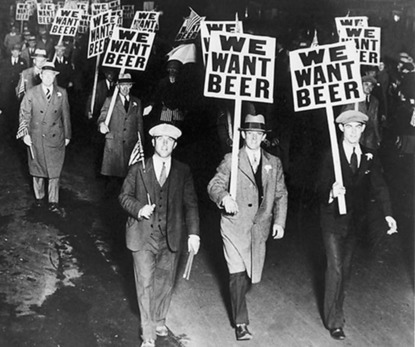
			                <content type="html" xml:base="https://www.mattmlaw.com/blog/2016/08/why-penn-state-should-encourage-beer-drinking/"><![CDATA[<p>The Penn State alcohol policy has been an abject failure. Irresponsible and excessive alcohol consumption appear to be at an all-time high in Happy Valley, yet attempts to curtail drinking have only made things worse. So how did we get to a place where Mount Nittany Medical Center can expect alcohol overdoses every weekend and underage drinking an public drunkenness charges clog the local magisterial district courts? The sad reality is that Penn State's alcohol policies have had the unintended consequence of encouraging students to drink hard liquor instead of beer.</p><p><img class="mt-image-none" height="347" width="415" src="/wp-content/uploads/sites/1204358/2016/08/we.want_.beer-thumb-415x347-75158.jpg" alt="we.want.beer-thumb-415x347-75158.jpg"></p><p>Believe it or not, kegs were once allowed in the Penn State dorms until 1984, or so I have been told. And in my Penn State undergrad days, kegs were a staple of every frat and apartment party. Yet kegs in State College are now relegated to house parties and bars, as apartments eventually joined the university's keg ban in a misguided effort to discourage excessive drinking. Likewise, Penn State has since imposed an outright ban on all alcohol in the dorms, even for those over 21.</p><p>These policies have backfired, just like they did during Alcohol Prohibition, our nation's only public policy blunder to fail more miserably than the War on Drugs. Students are not going to stop drinking alcohol because it is banned or restricted. Alcohol is simply too engrained in our Western culture, coupled with the fact that the most socially acceptable time to party is in one's youth. During Prohibition, bootleggers smuggled hard liquor because it takes up less space than beer and wine. The same thing now repeats itself on the Penn State campus. It is a lot easier to smuggle in a handle of vodka than a case of beer, and it is a lot easier to dispose of one empty bottle than 24 empty bottles or cans.</p><p>When Penn State students drink now, bad things are far more likely to happen than in the past. The overwhelming majority of underage drinking and public drunkenness cases I see these days arise from hard liquor. My clients tell me that a lot of parties do not even have beer; there is only hard liquor. And after two or three years of drinking hard liquor underage, these students will have been trained to drink hard liquor instead of beer once they turn 21.</p><p>Off campus, the keg ban has completely changed the Penn State drinking culture for the worse. If you cannot have kegs, then the only feasible and economical way to serve a lot of people is through hard liquor. Go to the Hamilton Street State Store Thursday through Saturday, and you will see young men in Greek-letter shirts filling up shopping carts with cheap hard liquor in plastic bottles, destined for the mouths of lightweight freshmen, who will be doing shots and guzzling jungle juice, instead of drinking cheap beer like their Nittany Nation ancestors.</p><p>As everyone knows except American college freshmen, no one should ever drink hard liquor unless they have had experience with training-wheel drinks like beer and wine. That is precisely why the drinking age in Germany is 16 for beer and wine, but 18 for hard liquor. That is the kind of law you get from a people known for&nbsp;Mr. Spock-like rational&nbsp;thinking, an obsession with safety and a love of drinking.</p><p>In my undergrad days, we had a beer-based drinking culture, and the alumni even older than me will tell you the same thing. Of course people got drunk, but hospital trips were rare. This is because it is incredibly difficult to overdose on beer, while hard liquor can pose a challenge to even the most seasoned boozers. And this is why beer drinking should be encouraged! If young people are going to drink, and we know they will, then they should be drinking beer.</p><p>Obviously, Penn State cannot actively encourage beer drinking, but it could at least stop inadvertently encouraging hard liquor consumption by discouraging beer drinking. I would have no problem with banning hard liquor in the dorms, while allowing beer and wine. The keg ban in the frats and downtown apartments must end. Until Penn State returns to its drinking culture of yore, we will continue to see irresponsible drinking, which creates a negative externality for the entire community.</p><p>Matt McClenahen is a Penn State alumnus and criminal defense lawyer in State College, PA. He is a beer snob who rarely imbibes in the hard stuff. <a title="http://www.mattmlaw.com/Criminal-Defense-Overview/Alcohol-Offenses-DUI.shtml" href="/alcohol-offenses/dui-defense/" data-wpel-link="internal">http://www.mattmlaw.com/Criminal-Defense-Overview/Alcohol-Offenses-DUI.shtml</a></p>]]></content>
						        </entry>
	        <entry>
            <author>
									                    <name>by McClenahen Law Firm P.C.</name>
				            </author>
            <title type="html"><![CDATA[State College Marijuana Decriminalization is Misunderstood]]></title>
            <link rel="alternate" type="text/html" href="https://www.mattmlaw.com/blog/2016/08/state-college-marijuana-decriminalization-is-misunderstood/" />
            <id>https://www.mattmlaw.com/?p=46292</id>
            <updated>2021-05-25T14:29:43Z</updated>
            <published>2016-08-19T05:00:00Z</published>
					<taxo:topics><![CDATA[-]]></taxo:topics>
            <summary type="html"><![CDATA[“Marijuana is decriminalized in State College! It is now the equivalent of a parking ticket!” Thanks to some irresponsible and inaccurate media reports coupled with a misunderstanding of criminal law, this is the misinformed belief a lot of Penn State students and Centre County residents now have. Given all the confusion generated by this ordinance, it is incumbent upon criminal…]]></summary>
			                <content type="html" xml:base="https://www.mattmlaw.com/blog/2016/08/state-college-marijuana-decriminalization-is-misunderstood/"><![CDATA[<p>"Marijuana is decriminalized in State College! It is now the equivalent of a parking ticket!" Thanks to some irresponsible and inaccurate media reports coupled with a misunderstanding of criminal law, this is the misinformed belief a lot of Penn State students and Centre County residents now have. Given all the confusion generated by this ordinance, it is incumbent upon criminal defense lawyers like me to set the record straight. The bottom line is that the decriminalization ordinance is essentially symbolic, and will have little if any effect on the Penn State community.</p><p>First of all, a local government does not have the authority to completely decriminalize marijuana, because a local government cannot override state criminal laws. Marijuana and drug paraphernalia remain crimes under the Pennsylvania Drug, Device and Cosmetic Act. The new State College Borough marijuana ordinance gives the State College Borough Police the option of charging a defendant with a summary offense local ordinance instead of the conventional, criminal charge, which leads to fingerprints, photographs and a criminal record with the Pennsylvania State Police and FBI.</p><p><img class="mt-image-none" height="280" width="420" src="/wp-content/uploads/sites/1204358/2016/08/stoner-girls-smoking-weed-gallery-2-50-thumb-420x280-74725.jpg" alt="stoner-girls-smoking-weed-gallery-2-50-thumb-420x280-74725.jpg"></p><p>The borough ordinance carries a fine of $250 for possessing less than 30 grams of cannabis and a $350 fine for smoking marijuana in public, while possession of a small amount of marijuana under state law carries the following maximum penalties: a fine of up to $500, incarceration or probation not to exceed 30 days and a six month driver's license suspension. Additionally, a conviction of any drug possession offense renders one indelible for federally-subsidized student loans. A person convicted of the borough ordinance would not face jail time or probation, a driver's license suspension or student-loan ban. An ordinance violator would also not be fingerprinted and photographed at the Centre County Correctional Facility.</p><p>Contrary to what at least one local media outlet reported, the decriminalization ordinance does NOT make possession of marijuana in State College Borough the equivalent of a parking ticket! If you pay a parking ticket on time, there is absolutely no record of it for anyone to find, not to mention the fact that potential employers are not going to look at a parking ticket the same way as marijuana possession charge. Even though a person charged with an ordinance violation will not be in the FBI and State Police criminal record data bases, he or she will have a record, which anyone with internet access can see. The docket sheet will be freely available on the AOPC (Administrative Office of Pennsylvania Courts) website, just like every crime from underage drinking to homicide.</p><p>Most background checks used by employers and landlords are not done by the FBI and State Police. Rather, most background checks are performed by private companies, which will pull a background check on prospective employees and tenants for a small fee. These background check services rely upon publicly available records on the Internet, such as the docket sheets on the AOPC website. Thus, if you plead guilty to marijuana possession under the borough ordinance, it is going to show up on most background checks, and I doubt that the typical employer is going to care whether you were charged with a borough ordinance or a crime when the underlying conduct is exactly the same.</p><p>That being said, the decriminalization ordinance will likely make very little difference for the thousands of cannabis consumers in Happy Valley. The State College Police already de facto decriminalized possession of a small amount of marijuana years ago by making it the lowest law enforcement priority, an approach common in American cities where there is "real crime" to deal with. In other words, the State College Police are not actively pursuing marijuana smokers, but they do still actively pursue cannabis sellers through time-consuming investigations. When State College Police respond to a noise complaint in an apartment building and happen to smell weed, they usually ignore it. This is because they are already overwhelmed with disorderly and violent drunk people, who negatively impact our community. By contrast, marijuana smokers are not bothering anyone.</p><p>This is not to say that State College Police never charge anyone with small amount of marijuana and drug paraphernalia. They do file such charges, albeit at a small fraction of what we see from the Penn State Police. Most commonly, this involves a "collateral damage" scenario, where the police get a search warrant for a house or apartment after a resident sold drugs to a confidential informant or undercover cop. If the subsequent search reveals that roommates had marijuana and/ or drug paraphernalia for personal use, these collateral damage roommates will normally be charged with misdemeanors, while the guy who sold drugs will be charged with felonies. Additionally, those brazen enough to toke in public or in parked vehicles should not expect the State College Police will look the other way.</p><p>I am curious to see whether the State College Police will start handing out borough ordinance citations for marijuana possession in cases, which would have been completely ignored in the past. It takes a lot less time and resources to file a citation than to file criminal charges, which require a mandatory court appearance for the police officer.</p><p>The Penn State Police take a very different approach to marijuana than their Borough Police brethren. The Penn State Police do actively enforce the marijuana laws. They do not ignore the smell of weed emanating from dorm rooms. In fact, they will even wake up a magisterial district judge at 3:00 a.m. to get a search warrant, if a student denies permission to search his or her dorm room. Consequently, almost all the small amount of marijuana and drug paraphernalia charges we see are filed by Penn State Police. And the Penn State Police do not file borough ordinance citations, even if an offense occurs on the parts of Penn State's campus, which are technically in the borough. If you are caught with marijuana on campus, you will still be charged criminally.</p><p>It is important for members of the Penn State and State College cannabis community to know that the new ordinance has not significantly changed things. You should not suddenly become brazen and carless about your cannabis consumption, especially if you live on campus. And if you live off campus and are charged under the new ordinance, you absolutely, positively should not plead guilty under the mistaken belief that it is just like a parking ticket! You should first talk to a criminal defense attorney, who may be able to help you avoid a conviction, which could negatively affect your future job prospects.</p><p>Matt McClenahen is a Penn State alumnus, State College criminal defense lawyer and member of the NORML Legal Committee.</p>]]></content>
						        </entry>
	        <entry>
            <author>
									                    <name>by McClenahen Law Firm P.C.</name>
				            </author>
            <title type="html"><![CDATA[State College Marijuana Decriminalization is Misunderstood]]></title>
            <link rel="alternate" type="text/html" href="https://www.mattmlaw.com/blog/2016/08/state-college-marijuana-decriminalization-is-misunderstood-1/" />
            <id>https://www.mattmlaw.com/?p=46295</id>
            <updated>2021-05-25T14:29:38Z</updated>
            <published>2016-08-19T05:00:00Z</published>
					<taxo:topics><![CDATA[-]]></taxo:topics>
            <summary type="html"><![CDATA[“Marijuana is decriminalized in State College! It is now the equivalent of a parking ticket!” Thanks to some irresponsible and inaccurate media reports coupled with a misunderstanding of criminal law, this is the misinformed belief a lot of Penn State students and Centre County residents now have. Given all the confusion generated by this ordinance, it is incumbent upon criminal…]]></summary>
			                <content type="html" xml:base="https://www.mattmlaw.com/blog/2016/08/state-college-marijuana-decriminalization-is-misunderstood-1/"><![CDATA[<p>"Marijuana is decriminalized in State College! It is now the equivalent of a parking ticket!" Thanks to some irresponsible and inaccurate media reports coupled with a misunderstanding of criminal law, this is the misinformed belief a lot of Penn State students and Centre County residents now have. Given all the confusion generated by this ordinance, it is incumbent upon criminal defense lawyers like me to set the record straight. The bottom line is that the decriminalization ordinance is essentially symbolic, and will have little if any effect on the Penn State community.</p><p><img class="mt-image-none" height="280" width="420" src="/wp-content/uploads/sites/1204358/2016/08/stoner-girls-smoking-weed-gallery-2-50-thumb-420x280-74725.jpg" alt="stoner-girls-smoking-weed-gallery-2-50-thumb-420x280-74725.jpg"></p><p>First of all, a local government does not have the authority to completely decriminalize marijuana, because a local government cannot override state criminal laws. Marijuana and drug paraphernalia remain crimes under the Pennsylvania Drug, Device and Cosmetic Act. The new State College Borough marijuana ordinance gives the State College Borough Police the option of charging a defendant with a summary offense local ordinance instead of the conventional, criminal charge, which leads to fingerprints, photographs and a criminal record with the Pennsylvania State Police and FBI.</p><p>The borough ordinance carries a fine of $250 for possessing less than 30 grams of cannabis and a $350 fine for smoking marijuana in public, while possession of a small amount of marijuana under state law carries the following maximum penalties: a fine of up to $500, incarceration or probation not to exceed 30 days and a six month driver's license suspension. Additionally, a conviction of any drug possession offense renders one indelible for federally-subsidized student loans. A person convicted of the borough ordinance would not face jail time or probation, a driver's license suspension or student-loan ban. An ordinance violator would also not be fingerprinted and photographed at the Centre County Correctional Facility.</p><p>Contrary to what at least one local media outlet reported, the decriminalization ordinance does NOT make possession of marijuana in State College Borough the equivalent of a parking ticket! If you pay a parking ticket on time, there is absolutely no record of it for anyone to find, not to mention the fact that potential employers are not going to look at a parking ticket the same way as marijuana possession charge. Even though a person charged with an ordinance violation will not be in the FBI and State Police criminal record data bases, he or she will have a record, which anyone with internet access can see. The docket sheet will be freely available on the AOPC (Administrative Office of Pennsylvania Courts) website, just like every crime from underage drinking to homicide.</p><p>Most background checks used by employers and landlords are not done by the FBI and State Police. Rather, most background checks are performed by private companies, which will pull a background check on prospective employees and tenants for a small fee. These background check services rely upon publicly available records on the Internet, such as the docket sheets on the AOPC website. Thus, if you plead guilty to marijuana possession under the borough ordinance, it is going to show up on most background checks, and I doubt that the typical employer is going to care whether you were charged with a borough ordinance or a crime when the underlying conduct is exactly the same.</p><p>That being said, the decriminalization ordinance will likely make very little difference for the thousands of cannabis consumers in Happy Valley. The State College Police already de facto decriminalized possession of a small amount of marijuana years ago by making it the lowest law enforcement priority, an approach common in American cities where there is "real crime" to deal with. In other words, the State College Police are not actively pursuing marijuana smokers, but they do still actively pursue cannabis sellers through time-consuming investigations. When State College Police respond to a noise complaint in an apartment building and happen to smell weed, they usually ignore it. This is because they are already overwhelmed with disorderly and violent drunk people, who negatively impact our community. By contrast, marijuana smokers are not bothering anyone.</p><p>This is not to say that State College Police never charge anyone with small amount of marijuana and drug paraphernalia. They do file such charges, albeit at a small fraction of what we see from the Penn State Police. Most commonly, this involves a "collateral damage" scenario, where the police get a search warrant for a house or apartment after a resident sold drugs to a confidential informant or undercover cop. If the subsequent search reveals that roommates had marijuana and/ or drug paraphernalia for personal use, these collateral damage roommates will normally be charged with misdemeanors, while the guy who sold drugs will be charged with felonies. Additionally, those brazen enough to toke in public or in parked vehicles should not expect the State College Police will look the other way.</p><p>I am curious to see whether the State College Police will start handing out borough ordinance citations for marijuana possession in cases, which would have been completely ignored in the past. It takes a lot less time and resources to file a citation than to file criminal charges, which require a mandatory court appearance for the police officer.</p><p>The Penn State Police take a very different approach to marijuana than their Borough Police brethren. The Penn State Police do actively enforce the marijuana laws. They do not ignore the smell of weed emanating from dorm rooms. In fact, they will even wake up a magisterial district judge at 3:00 a.m. to get a search warrant, if a student denies permission to search his or her dorm room. Consequently, almost all the small amount of marijuana and drug paraphernalia charges we see are filed by Penn State Police. And the Penn State Police do not file borough ordinance citations, even if an offense occurs on the parts of Penn State's campus, which are technically in the borough. If you are caught with marijuana on campus, you will still be charged criminally.</p><p>It is important for members of the Penn State and State College cannabis community to know that the new ordinance has not significantly changed things. You should not suddenly become brazen and carless about your cannabis consumption, especially if you live on campus. And if you live off campus and are charged under the new ordinance, you absolutely, positively should not plead guilty under the mistaken belief that it is just like a parking ticket! You should first talk to a criminal defense attorney, who may be able to help you avoid a conviction, which could negatively affect your future job prospects.</p><p>Matt McClenahen is a Penn State alumnus, State College criminal defense lawyer and member of the NORML Legal Committee.</p>]]></content>
						        </entry>
	        <entry>
            <author>
									                    <name>by McClenahen Law Firm P.C.</name>
				            </author>
            <title type="html"><![CDATA[DUI and Underage Drinking Charges against Amish Teens]]></title>
            <link rel="alternate" type="text/html" href="https://www.mattmlaw.com/blog/2016/08/dui-and-underage-drinking-charges-against-amish-teens/" />
            <id>https://www.mattmlaw.com/?p=46301</id>
            <updated>2021-05-25T14:29:47Z</updated>
            <published>2016-08-19T05:00:00Z</published>
					<taxo:topics><![CDATA[-]]></taxo:topics>
            <summary type="html"><![CDATA[DUI charges are not limited to those who drive motor vehicles on public roads. In fact, a Pennsylvania Amish teen recently learned the hard that you can get a DUI operating ANY vehicle on a public roadway, including a horse-drawn buggy. Pennsylvania State Police recently filed charges of DUI and underage drinking against an 18 year old Amish man in…]]></summary>
			                <content type="html" xml:base="https://www.mattmlaw.com/blog/2016/08/dui-and-underage-drinking-charges-against-amish-teens/"><![CDATA[<p>DUI charges are not limited to those who drive motor vehicles on public roads. In fact, a Pennsylvania Amish teen recently learned the hard that you can get a DUI operating ANY vehicle on a public roadway, including a horse-drawn buggy. Pennsylvania State Police recently filed charges of DUI and underage drinking against an 18 year old Amish man in Indiana County. The police pulled over the buggy when they saw two young men riding on the roof. All four buggy passengers were under 21 and were charged with underage drinking.</p><p><img class="mt-image-none" height="206" width="480" src="/wp-content/uploads/sites/1204358/2016/08/amish.police-thumb-480x206-74908.jpg" alt="amish.police-thumb-480x206-74908.jpg"></p><p>With shows like "Amish Mafia" and the documentary "Devil's Playground," most "English" people are now aware of Rumspringa, a period when Amish youth are given freedom to enjoy temptations of the secular world before deciding whether or not to join the church. Thus, I doubt that anyone is really shocked to hear that Amish youth drink just like their English age-contemporaries. However, a lot of people might be surprised to learn that Pennsylvania DUI laws apply to any vehicle on a public road. You can even get a DUI on a bicycle. Most of my clients who have had bike DUIs had absolutely no clue that they could get a DUI on a bike, and likewise, I suspect that the unfortunate buggy driver may not have been aware that he could get a DUI.</p><p>Most first-time DUI offenders are eligible for a program called ARD, which stands for Accelerated Rehabilitative Disposition. Successful completion of the program can lead to dismissal and expungement of the charges, but most ARD-DUI defendants lose their driver's license for a period of time. Yet the unfortunate Amish teen driver will be able to continue to drive his buggy. One does not need a driver's license to operate a horse and buggy on a public road any more than one needs a license to ride a bike.</p><p><br>Matt McClenahen is a criminal defense attorney in State College, Pennsylvania, with extensive experience in DUI cases. <a title="http://www.mattmlaw.com/Criminal-Defense-Overview/DUI-Defense.shtml" href="/alcohol-offenses/dui-defense/" data-wpel-link="internal">http://www.mattmlaw.com/Criminal-Defense-Overview/DUI-Defense.shtml</a>&nbsp;Er kummt vun Mifflin County und kann a Bissel Pennsilfanisch Deitsch schwetze.</p>]]></content>
						        </entry>
	</feed>